
https://psychonautwiki.org/wiki/Cannabis
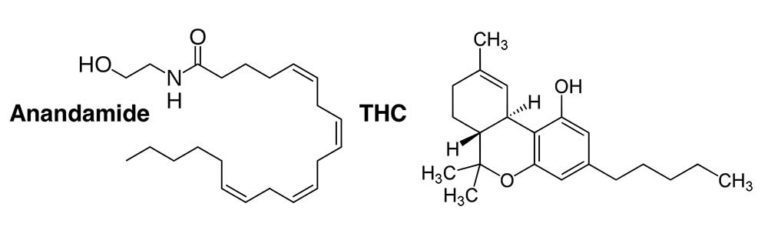
Both CBD and THC have the exact same molecular structure: 21 carbon atoms, 30 hydrogen atoms, and 2 oxygen atoms. A slight difference in how the atoms are arranged accounts for the differing effects on your body.
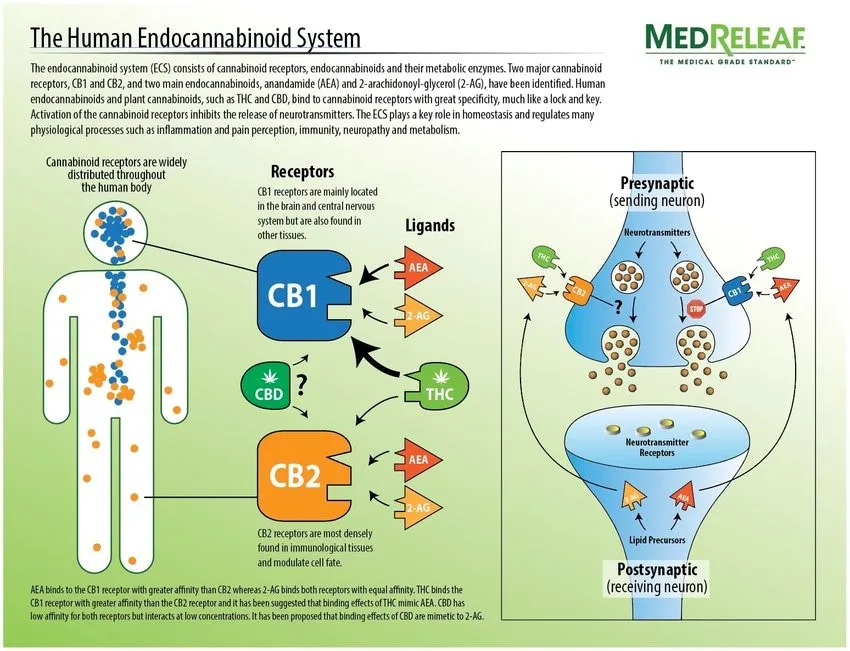
Both CBD and THC are chemically similar to your body’s endocannabinoids. This allows them to interact with your cannabinoid receptors.
The interaction affects the release of neurotransmitters in your brain. Neurotransmitters are chemicals responsible for relaying messages between cells and have roles in pain, immune function, stress, and sleep, to name a few.
Back in July of 2016, the THC receptor cannabinoid receptor-1 (CB-1) was discovered. This was, and is, a huge deal as the discovery tells us the three-dimensional position of all of the atoms inside the protein.
This particular class of proteins is called g-protein coupled receptors (GPCRs), which are some of the most important receptors in the human body, accounting for over 60 percent of all drug targets. These receptors are important because they regulate a phenomenon known as cellular signal transduction, a means of communication both between two or more cells and within a single cell.
-
CB-1 is known to regulate the release and uptake of calcium channels in dopaminergic, dopamine-producing neurons, which, in turn, tell the neuron to release neurotransmitters or hold them.
-
CB-1 is paramount to the normal functioning of the human body; it isn’t just a fun button that THC can press. There are many other chemicals that are naturally produced by the body to bind to it and affect its structure.
As already said, our bodies naturally produce a chemical known as anandamide (pictured below), which affects our brains in such a way that produces ‘normal’ thought. Since both THC and anandamide bind to CB-1, they must have different effects on the structure.
CBD vs. THC: Psychoactive components
Despite their similar chemical structures, CBD and THC don’t have the same psychoactive effects. CBD is psychoactive, just not in the same manner as THC. It doesn’t produce the high associated with THC. CBD is shown to help with anxiety, depression, and seizures.
Cannabis and CBD: What’s the Difference?
THC (tetrahydrocannabinol) and CBD (cannabidiol) are both compounds found in Cannabis plants that bind to cannabinoid receptors. Cannabinoid CB1 G-protein coupled [TT1] receptors are among the most common Gai-protein receptors found in the brain. Cannabis is well known for a variety of medicinal and recreational uses. The THC compound is most associated with psychoactive effects and is the primary compound driving recreational use.
THC binds with the cannabinoid 1 (CB1) receptors in the brain. It produces a high or sense of euphoria.
CBD binds very weakly, if at all, to CB1 receptors. CBD needs THC to bind to the CB1 receptor and, in turn, can help reduce some of the unwanted psychoactive effects of THC, such as euphoria or sedation.
CBD, Tryptophan and Serotonin
CBD has a suppressive effect on cytokine-induced tryptophan degradation. This allows CBD to increase tryptophan levels in unstimulated brain areas, creating a passive baseline increase.1 As tryptophan is a key compound in the serotonin synthesis pathway, increasing the bioavailability of tryptophan can lead to increased levels of serotonin.1
CBD Binds to GABA Receptors
When CBD binds GABAA receptor subtypes, it can support neurological anticonvulsant and anxiolytic action. It does not bind competitively with the benzodiazepine receptor2, and because it doesn’t have the same receptor location, it could potentially be effective in individuals who are resistant to benzodiazepines. This mechanism also gives the potential to tailor CBD to specific GABA receptors.2
Pain Perception Mediated by CBD
CBD is the compound that binds CB1 and CB2 receptors, which are the G-protein coupled receptors that affect cyclic-AMP.3 CB1 is more pervasive than CB2 throughout the body overall.3 CB1 receptors have a high concentration in areas of the central nervous system, spinal cord4 and the peripheral nervous system5 that have nociceptive functions, indicating a likely involvement in pathways important to pain mediation.
Breastmilk
The main psychoactive component of cannabis, tetrahydrocannabinol (THC), is excreted into breastmilk in small quantities. The duration of detection of THC in milk has ranged from 6 days to greater than 6 weeks in various studies. Concern has been expressed regarding the possible effects of cannabis on neurotransmitters, nervous system development and endocannabinoid-related functions.
https://www.ncbi.nlm.nih.gov/books/NBK501587/
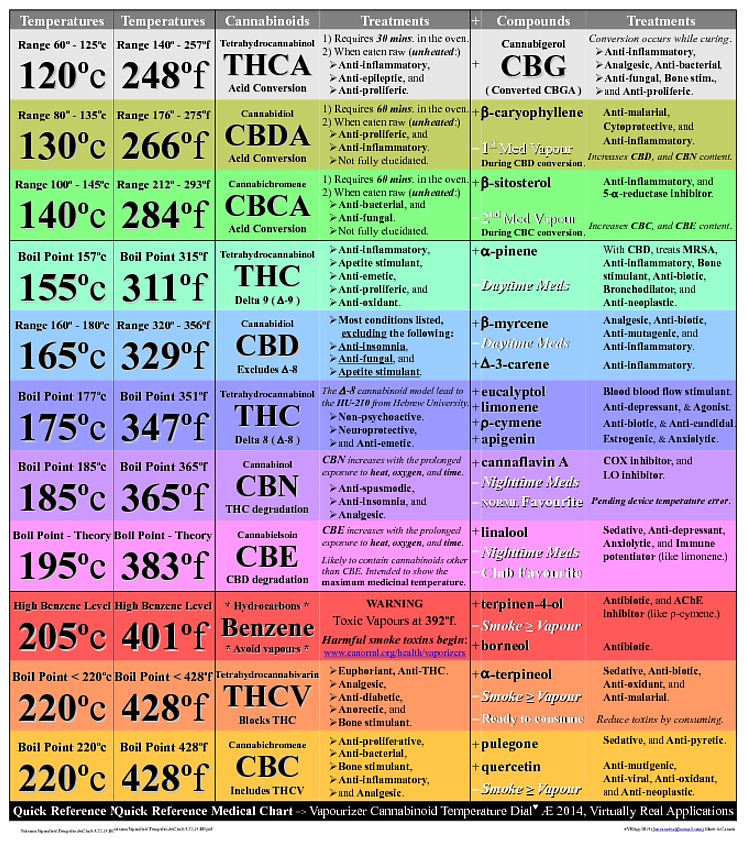
Cannabinoid Temperature Guide
Cultivation
https://www.amazon.com/Marijuana-Botany-Advanced-Propagation-Distinctive/dp/091417178X
https://www.amazon.com/Cannabis-Encyclopedia-Definitive-Cultivation-Consumption/dp/1878823345
https://www.reddit.com/r/microgrowery/
Chemistry / Synthesis
REDACTED
This content has been redacted by the Department of Truth™. The information previously contained in this document has been deemed inappropriate for public distribution.