Chemical allergy is an immunologically mediated adverse reactio to a chemical resulting from previous sensitization to that chemical or to a structurally similar one. The term hypersensitivity is most often used to describe this allergic state, but allergic reaction and sensitization reaction are also used to describe this situation when preexposure of the chemical is required to produce the toxic effect.
Once sensitization has occurred, allergic reactions may result from exposure to relatively very low doses of chemicals, therefore, population-based dose–response curves for allergic reactions have seldom been obtained.
- Because of this omission, some people assumed that allergic reactions are not dose-related.
Most chemicals and their metabolic products are not sufficiently large to be recognized by the immune system as a foreign substance and thus must first combine with an endogenous protein to form an antigen (or immunogen). A molecule that must combine with an endogenous protein to elicit an allergic reaction is called a hapten and stimulates the production of antibody molecules only when conjugated to a larger molecule, called a carrier molecule.
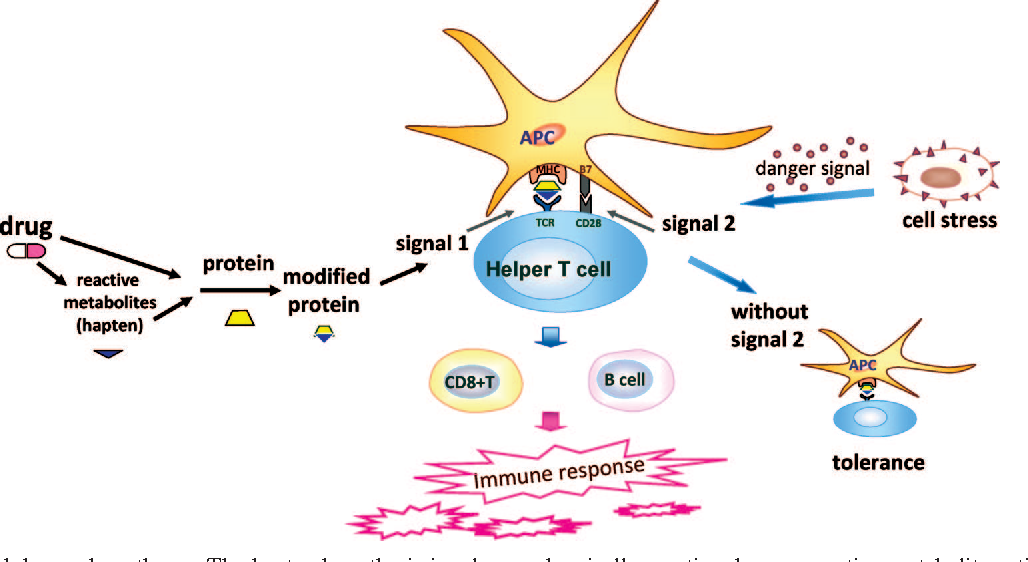
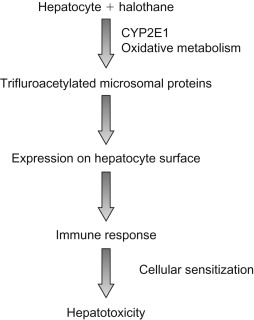
The hapten-protein complex (antigen) is then capable of eliciting the formation of antibodies, and usually at least one or two weeks is required for the synthesis of significant amounts of antibodies. Subsequent exposure to the chemical results in an antigen–antibody interaction, which provokes the typical manifestations of allergy.
- Allergic reactions may involve various organ systems and range in severity from minor skin disturbance to fatal anaphylactic shock.