Once the poison is in the body, it has to overcome or avoid the bodys natural defenses and translocate to the area in which it will act.
Depending primarily on the degree and route of exposure, chemicals may adversely affect the function and/or structure of living organisms. The qualitative and quantitative characterization of these harmful or toxic effects is essential for an evaluation of the potential hazard posed by a particular chemical.
Take a look at the flow chart on the figure below:
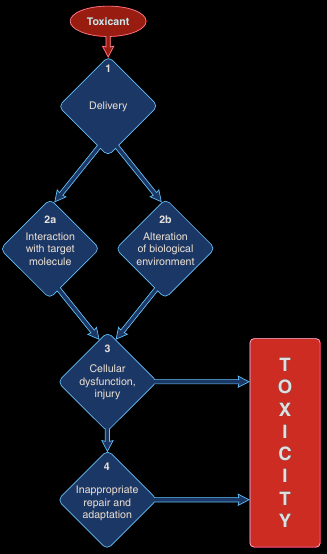
- The toxicant is delivered to its target or targets.
- The ultimate toxicant interacts with endogenous target molecules.
- Triggers perturbations in cell function and/or structure.
- Initiates repair mechanisms at the molecular, cellular, and/or tissue levels as well as adaptive mechanisms to diminish delivery, boost repair capacity, and/or compensate for dysfunction.
- When the perturbations induced by the toxicant exceed repair and adaptive capacity or when repair and adaptation becomes malfunctional, toxicity occurs.
The concentration of the ultimate toxicant at the target mol- ecule depends on the relative effectiveness of the processes that increase or decrease its concentration at the target site:
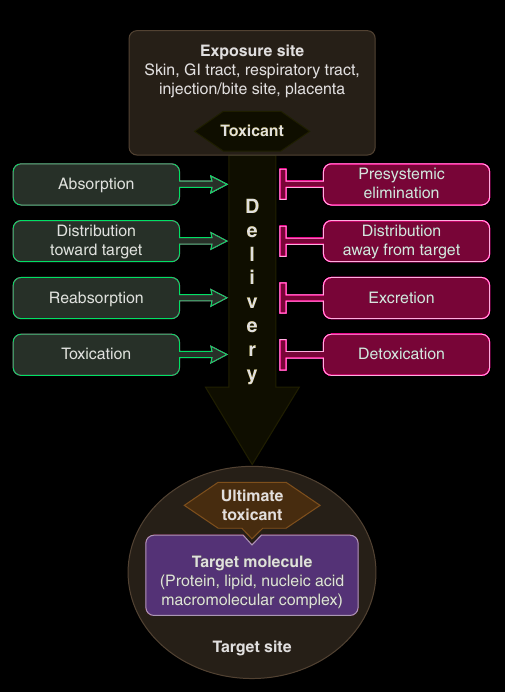
The accumulation of the ultimate toxicant at its target is facilitated by its absorption, distribution to the site of action, reabsorption, and toxication (metabolic activation).
ABSORPTION
Absorption: is the transfer of a chemical from the site of exposure.
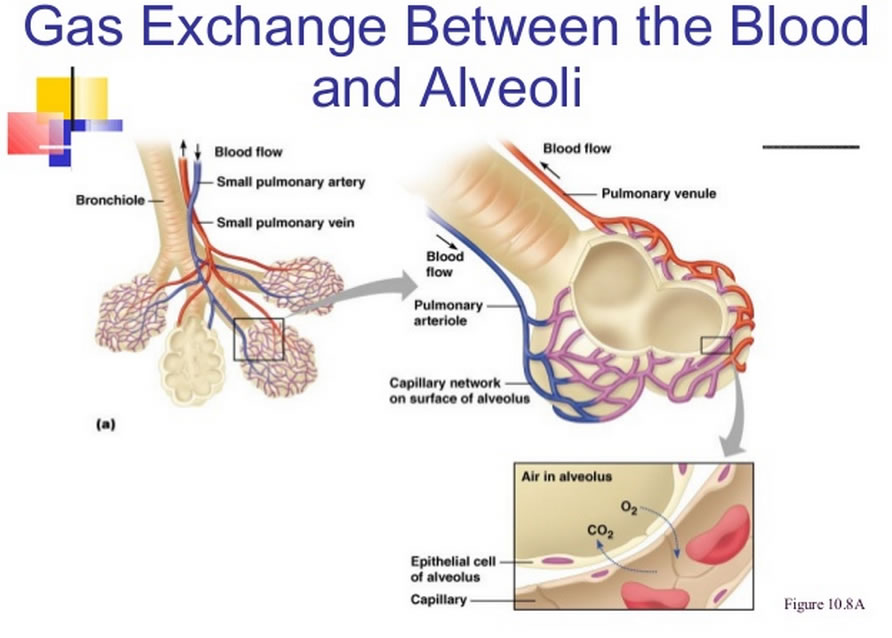
When inhaled a poison is in gas form and uses the bodys blood stream to move through the body as absorbed gases though the alveoli.
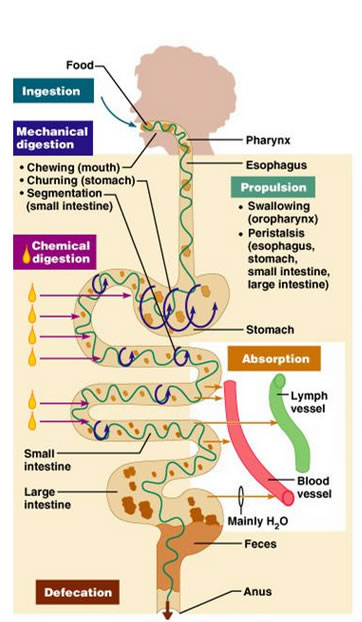
When ingested the poison is absorbed through the GI tract and small intestine.
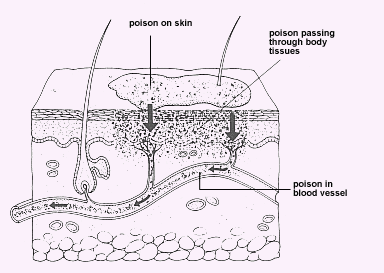
When absorbed through the skin the toxin passes first through the pores, then into the subcutaneous tissues and then finally into the blood stream.
PRESYSTEMIC ELIMINATION
Presystemic Elimination: during transfer from the site of exposure to the systemic circulation, toxicants may be eliminated.
DISTRIBUTION
Distribution refers to how the poison is translocated through the body once absorbed. In most cases, transport occurs through blood flow. The rate of distribution is therefore dependent on blood flow and the chemical characteristics of the poison. (I.e. if it has a high affinity for certain tissues distribution throughout the body will be slow). The rate of distribution can vary over time (no pun intended).
Toxicants exit the blood during the distribution phase, enter the extracellular space, and may penetrate into cells.
- Chemicals dissolved in plasma water may diffuse through the capillary endo- thelium via aqueous intercellular spaces and transcellular pores called fenestrae and/or across the cell membrane.
- Lipid-soluble compounds move readily into cells by diffusion.
- Highly ionized and hydrophilic xenobiotics (eg, tubocurarine and aminoglycosides) are largely restricted to the extracellular space unless specialized membrane carrier systems are available to transport them.
During distribution, toxicants reach their site or sites of action, usually a macromolecule on either the surface or the interior of a particular type of cell.
Mechanisms Facilitating Distribution to a Target:
Porosity of the capillary endothelium.
- Endothelial cells in the hepatic sinusoids and in the renal peritubular capillaries have larger fenestrae (50–150 nm in diameter) that permit passage of even protein-bound xenobiotics. This favors the accumulation of chemicals in the liver and kidneys.
Specialized membrane transport.
- Specialized ion channels and membrane transporters can contribute to the delivery of toxicants to intracellular targets.
STORAGE AND BINDING
If the poison is not acute, then the poison must build up over time. Storage in adipose tissue (fat) will occur for those chemical compounds that are non-polar in nature.
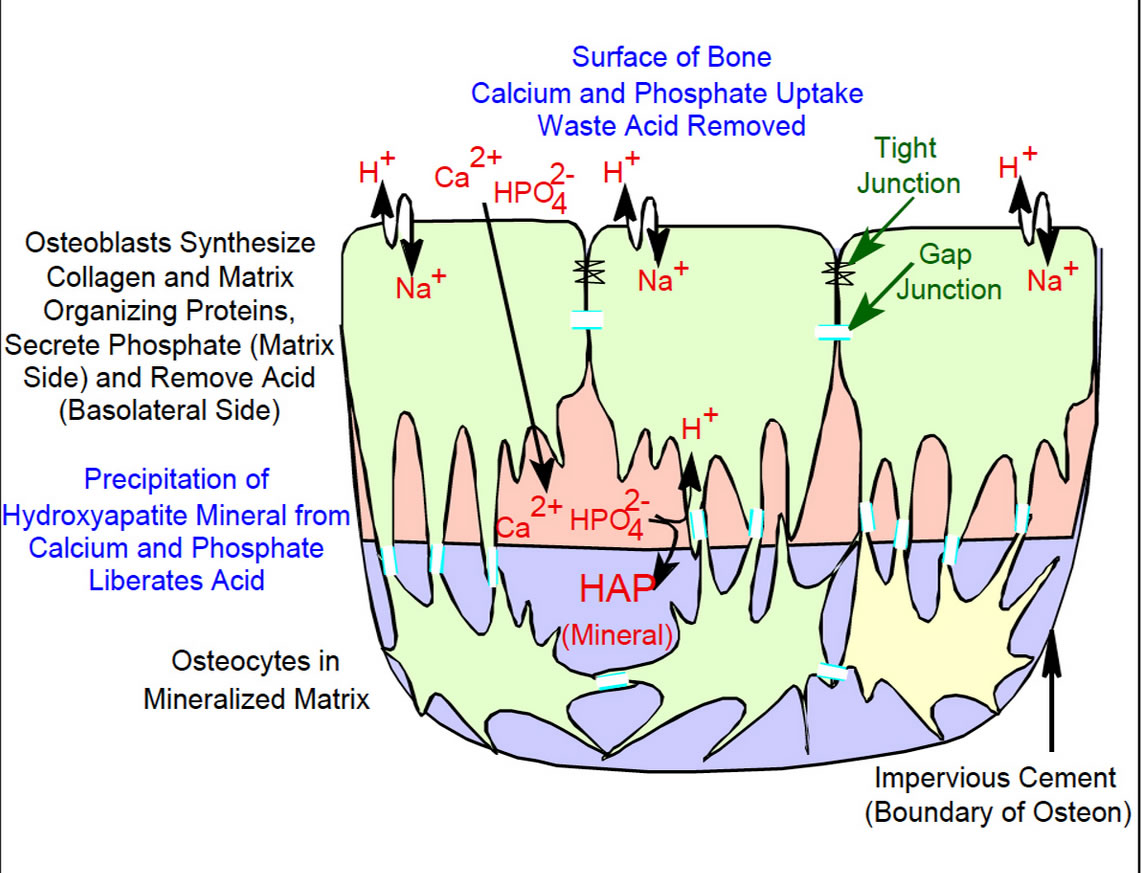
In some cases, especially those involving heavy metals, the poisons may be bound in the bones of the victim. Chemicals that are similar in nature to Calcium- e.g. Fluoride (F), Lead (Pb), and Strontium (Sr) find chemical pathways that will imbed them into bone using the body’s natural bone building apparati.