Neurotoxins are by far the deadliest of the toxins. Since they target and destroy nerves they can cause paralysis, seizures and death. Some chemicals that fall into the category of a neurotoxin are listed below:
- Lead
- Ethanol (drinking alcohol)
- Glutamate
- Nitric oxide (NO)
- Botulinum toxin (e.g. Botox)
- Tetanus toxin
- Tetrodotoxin (Pufferfish Toxin)
Some of the items on this list are probably familiar and surprising since you would not normally think of ethanol as a toxin but at sufficient dosage it can cause death. The last chemical on the list is the poison from puffer fish and is most likely the only chemical on the list you would normally associate with being a poison. But each of the chemicals can in fact do damage to the nerves in your body so they qualify as toxins.
Neurotoxins have a number of mechanisms by which they inhibit normal neuron cellular processes. These processes include but are not limited to membrane depolarization and inter-neuron communication pathways. The neurotoxin causes death by binding to and keeping nerve cells from performing their normal activities. When the nerve cells become damaged the body sends signals that cause cellular apoptosis or self-death. The damaged pathways lead to complete nervous system shut down and since nerve signals are what tell our heart to beat and lungs to inhale death soon follows.
The table below shows different types of Neurotoxins and their specific type of inhibition:
| ==Neurotoxin classification== | ==Neurotoxins== |
|---|---|
| Na channel inhibitors | Tetrodotoxin |
| K channel inhibitors | Tetraethylammonium |
| Cl channel inhibitors | Chlorotoxin |
| Ca channel inhibitors | Conotoxin |
| Inhibitors of synaptic vesicle release | Botulinum toxin, tetanus toxin |
| Receptor inhibitors | Bungarotoxin, Curare |
| Receptor agonists | 25I-NBOMe, JWH-018 |
| Blood brain barrier inhibitors | Aluminium, mercury |
| Cytoskeleton interference | Arsenic, ammonia |
| Ca-mediated cytotoxicity | Lead |
| Multiple effects | Ethanol |
| Endogenous neurotoxin sources | Nitric oxide, glutamate |
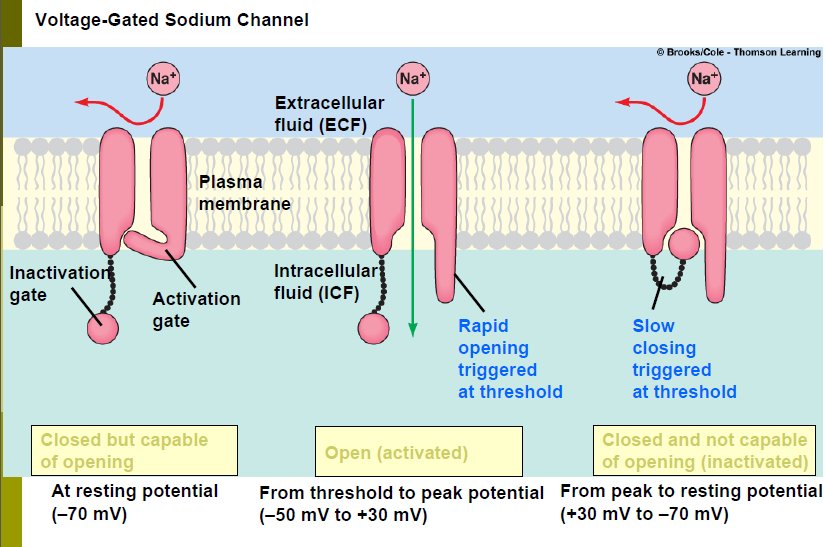
Looking specifically as Tetrodotoxin as an example, we see that the tetrodotoxin molecule binds to the channels that allow sodium ions the pass into and out of the nerve cell.
http://pittmedneuro.com/actionpotentials.html
Sodium ions are used as part of a “voltage gate” system. Influx of sodium “fires” the neuron to send neutrotransmitters to the brain to signal pain or other reflex actions. With the channels blocked, depolarization is prevented and the nerve cannot propagate the feeling. This would mean the victim of the toxin would lose feeling in that area. As the toxin and thereby the numbness spreads it will eventually reach the lungs or heart causing arrest and then death. Tetrodotoxin is therefore slow acting and painful with death occurring around 3 hours after ingestion if sufficient quantities are consumed.