http://www.emc2-explained.info/
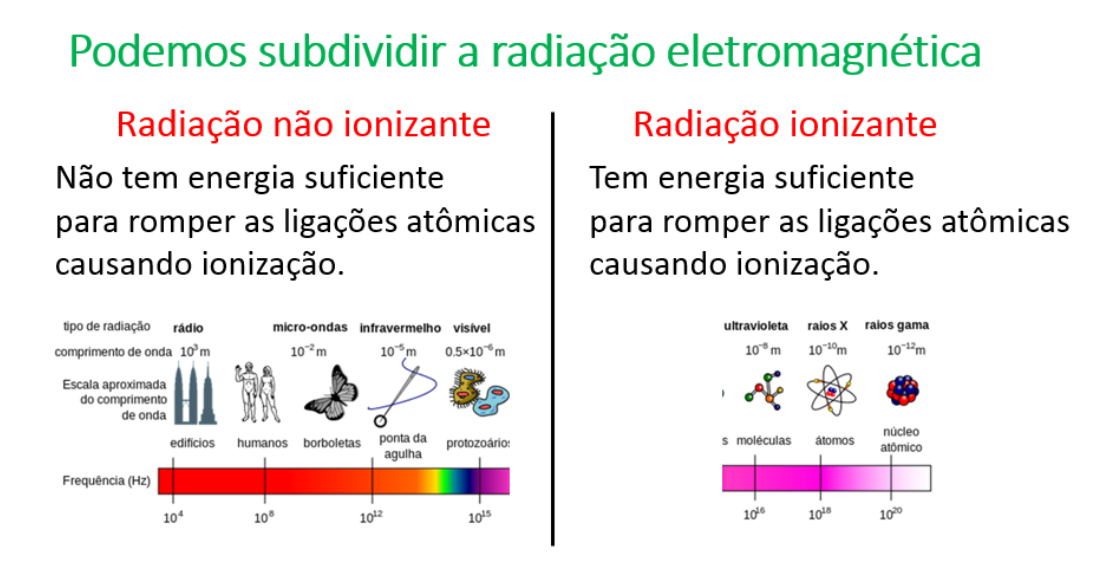
***radiation ***is the emission or transmission of energy in the form of waves or particles through space or through a material medium
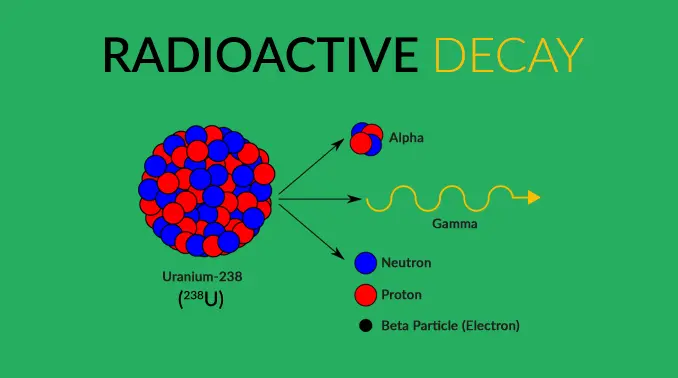
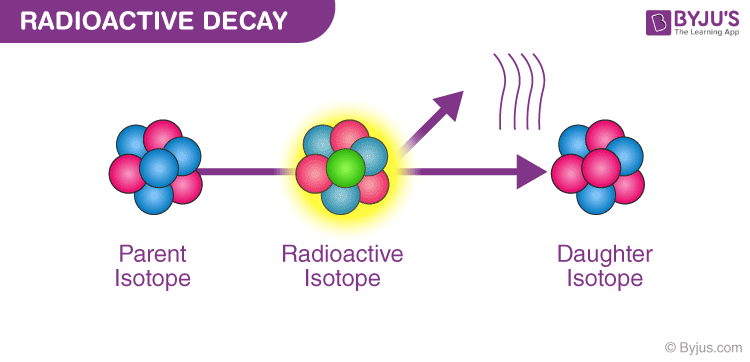
Radiation Decay
Fissile materials have a highly unstable nucleous:
The higher a chemical element is on the periodic table the more protons it contains in the nucleus. Every proton has a positive electrical charge which makes these nucleons repel one another. Neutrons with their neutral electric charge only express the weak and strong nuclear binging forces so they tend to draw the protons close together despite this electrical repulsion. ==As elements get very large the proton electrical repulsion effect becomes stronger and to be stable a nucleus needs extra neutrons to overcome this repulsion. However when the number of protons reaches 89, the element Actinium, there can no longer be enough neutrons to create a stable nucleus.==
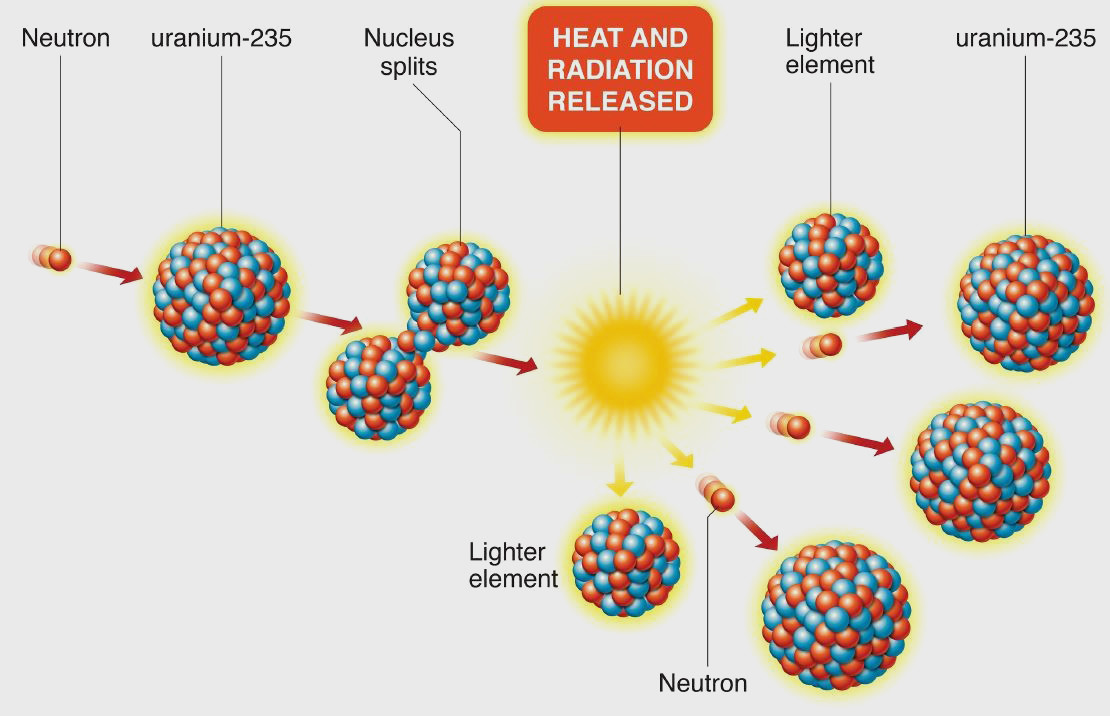
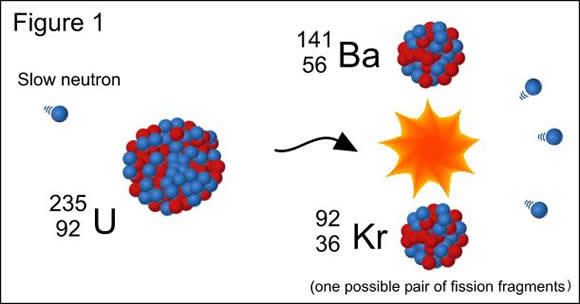
Every element from Actinium, number 89, and higher are unstable and sooner or later the repulsion effect causes them to undergo some form of radioactive decay as the nucleus falls from a higher energy state to a lower level.
The products of the radiation decay are:
- Radiation
- Other element isotope (lighter)
- Heat
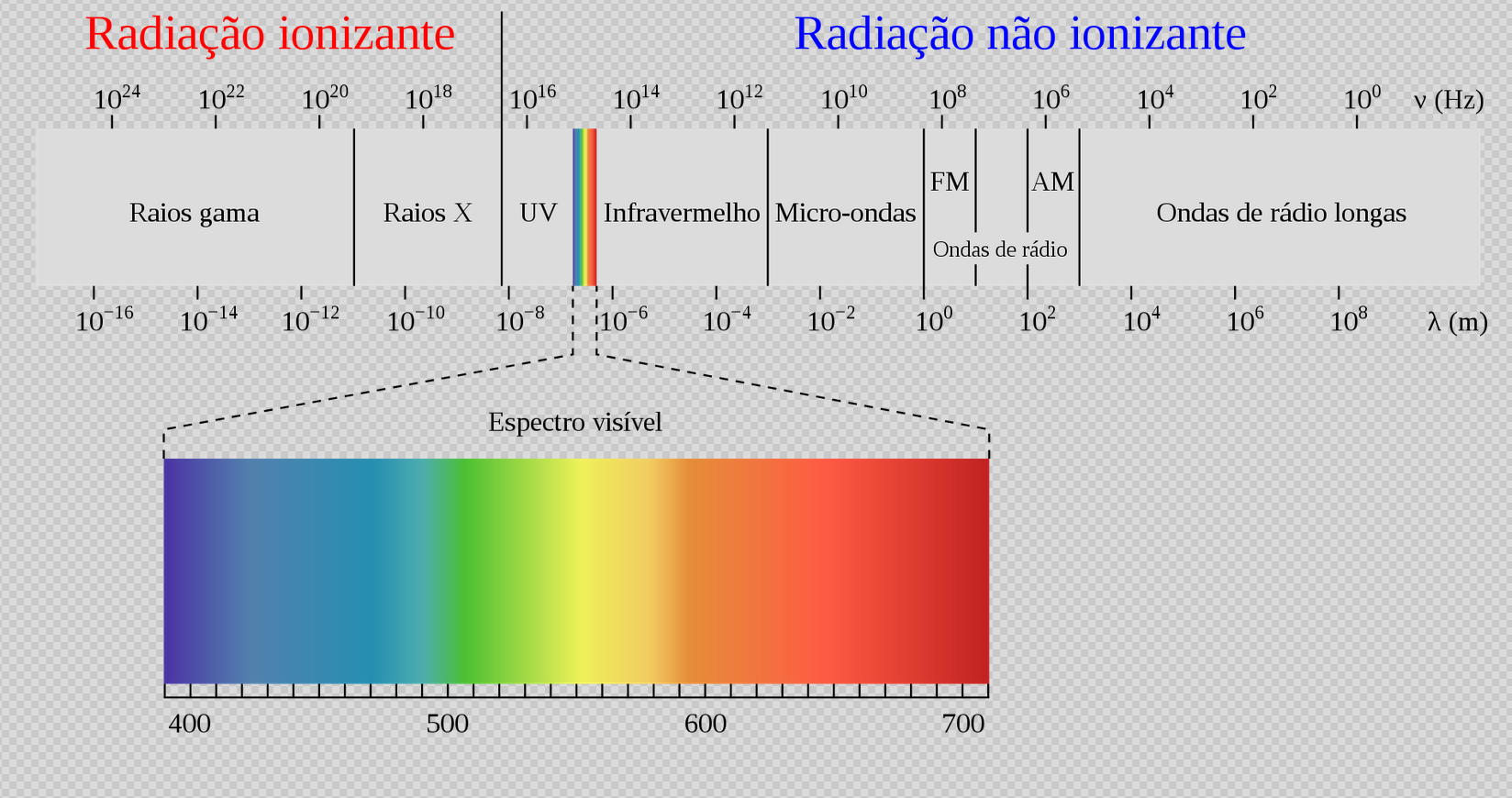
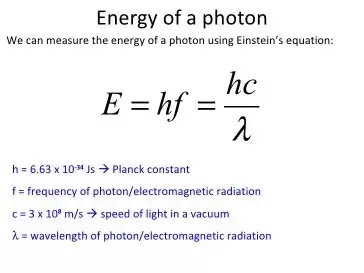
Gamma radiation has the high wavelength of the spectrum, which leads to the high energy!
Radiation Sensor
Modern Radiation detectors uses something called ==Scintillation Materials==.
That’s because other solutions like ***Geiger’s Counters ***requires high voltages to perate, what is not desired, specially when dealing with very sensitive eletronics that will freak when close to crazy magnetics fields (consequence of the high voltages).
The best explanation for what a Scintillation Material is:
The Scintillation Material can be understood as wavelength displacer or a frequency translator. The radiation that hits the material are not on the visible spectrum, but the Scintillation Material will emit visible light when hit by the radiation.
Scintillation Material --> Photodiode --> Charge Sensitive Amplifier (CSA) --> Shaping Circuit (SC) --> ADCThe sensor (photodiode) will deliver current pulses. The amp-op Integrator will produce the sum output of those pulses.