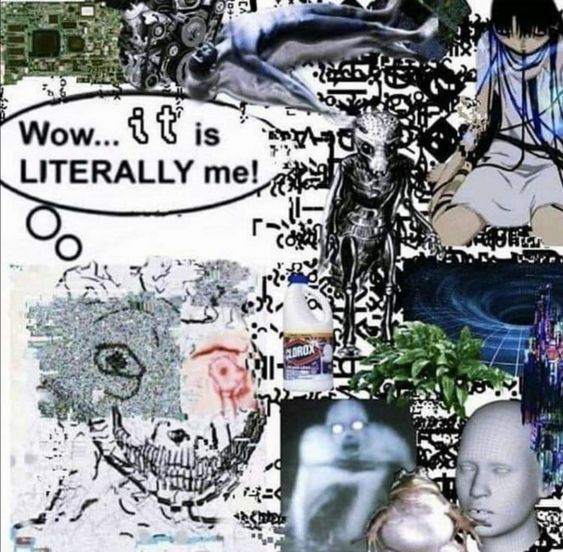
As culture and society atomize, we are bombarded with a kaleidoscopic chaos of brightly-colored atoms of meaning, and it becomes impossible to construct or maintain a coherent self.
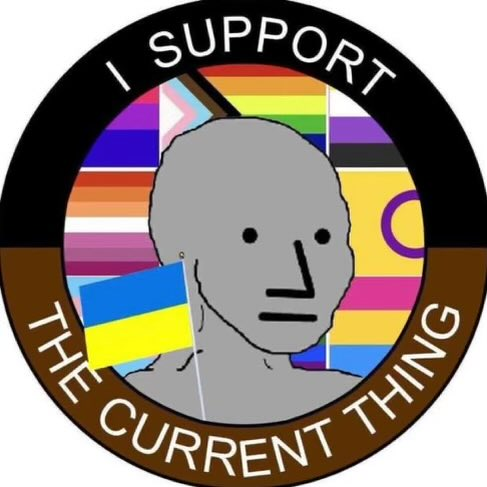
https://meaningness.com/meaningness-history
The kaleidoscope of meaning
Subcultures proved unable to provide either the breadth or depth of meaning people need. Also, lacking strong organizing principles, they repeatedly fissioned in response to differences in view. This is most obvious in the case of subcultures centered on musical genres.
The subcultural mode marked a fundamentally new approach to meaningness. It abandoned universalism—the delusion that meanings must be the same for everyone, everywhere, eternally. It recognized that different people are actually different, and need different cultures, societies, and psychologies. https://meaningness.com/subcultures
Everything is equally available everywhere (which is fabulous). Now, there are no boundaries, so bits of culture float free. Unfortunately, with no binding contexts, nothing makes sense.
Meanings arrive as brilliant shards of colored glass in a kaleidoscope.
As pessoas estão confusas em suas próprias crenças, não existe uma crença dominante com forte influência capaz de dar propósito coletivo. Estamos afogados em uma mistura caótica de culturas, subculturas, crenças e informação. Isso pode ser facilmente notado ao encontrar um cristão que acredita em astrologia, numerologia, limpeza espiritual e etc. Mesmo sendo algo “condenado” pela sua crença primordial, as pessoas sentem que é “ok” ter sua fé dividida. O real problema é que uma fé dividida é uma fé fraca, incapaz de definir propósito e uma evidência de que até aqueles que acreditam em uma força superior, vivem uma crise de propósito coletiva.
As pessoas não se importam. Não existe propósito suficiente para fazer com que se importem. Pessoas sem propósito desaceleram o avanço coletivo.
With no urge for context to make culture understandable, everything is equally appealing everywhere.
In the 1960s, for the first time, everyone in an American generation listened to the same music, regardless of genre—as an expression of solidarity. Now, everyone in the world listens to the same music, regardless of genre, again—just because it’s trending on YouTube.
Authenticity”—the aesthetic ideal of subculturalism—is impossible because there are no standards to be authentic to.
“Authenticity” of self, like authenticity of culture, becomes meaningless when there is no “thine own” to be true to. When it’s obviously impossible to form a systematic self, the task is to surf your own incoherence. Increasingly, this is a practical problem, not an existential threat.
In atomization, the subcultural mode’s local communities cannot hold together, because they no longer deliver adequate meaning. The subcultural solution to the problems of self and society—intermediate-scale subsocieties that buffer individuals from national institutions—failed.
Tudo isso tenta ser resolvido usando a internet… Onde pessoas que se identificam com uma mesma subcultura conseguem interagir e se comunicar mesmo estando longe.
- An online relationships replace in-person ones? Can electronic communities provide the same benefits as local ones?
The vestiges of systematic social organization are crumbling. As culture and society atomize, it becomes impossible to maintain a coherent ideology. Religions decohere into vague “spirituality,” and political isms give way to bizarre, transient, reality-impaired online movements.
Decontextualized, contradictory, intensely-proclaimed religious and political “beliefs” displace legacy systems of meaning. These are not beliefs in an ordinary sense, but advertisements of personal qualities and tribal identification. The atomized mode generates paranoia, because without the systematic mode’s “therefores,” its structure of justification, there are no memetic defenses against bad ideas.
This leaves cracking systems of government facing atomized populations, mutually uncomprehending because of their different modes of processing meaning, producing increasingly intense paranoia on both sides.
The loss of coherence, of “therefore,” gives a misimpression of nihilism, of meaninglessness. In the atomized mode, though, there’s overwhelming quantities of meaning.
The difference is that we now need to manage hugely more complexity, diversity, volume, and urgency of meanings. Individuals can get by in the atomized world without coherent understanding. Societies cannot.
Civilization still needs large systematic institutions—states, corporations, markets, universities—to survive. The atomized mode corrodes the social systems we depend on. Some are nearing collapse. I do not know whether people who grew up in that mode, and disdain systematicity, can keep the machinery of civilization running.
In reality, we have always been in the fluid mode, because complete choicelessness is impossible; totally consistent systems are impossible; and absolute atomization is impossible. Eternalism and nihilism are impossible; we always know better. The fluid mode recognizes that structures of meaning are valuable but always nebulous; systems are powerful but always incomplete.
*“The paradoxical solitude and omnipotence of the otaku, the new century’s ultimate enthusiast: the glory and terror inherent of the absolute narrowing of personal bandwidth.” - *William Gibson, “Shiny balls of Mud” (TATE 2002)
https://meaningness.com/atomized-mode
https://www.gwern.net/notes/Parasocial
https://www.gwern.net/The-Melancholy-of-Subculture-Society