You Can’t Just Flip the Switch on Empowerment
Empowered teams are closer to the customer, move faster, build better, and have more fun doing it. So why does everything fall apart when we empower our teams?
The teams flounder. Decisions don’t get made. Or worse, they make decisions that miss the mark entirely. The leadership team gets frustrated - “we gave them autonomy, why aren’t they using it?” - and eventually swoops back in to “fix things,” confirming everyone’s suspicion that the whole empowerment thing was performative nonsense.
The problem isn’t empowerment. The problem is thinking you can just flip a switch and go from directive management to delegated autonomy overnight.
Leadership Model Matrix.
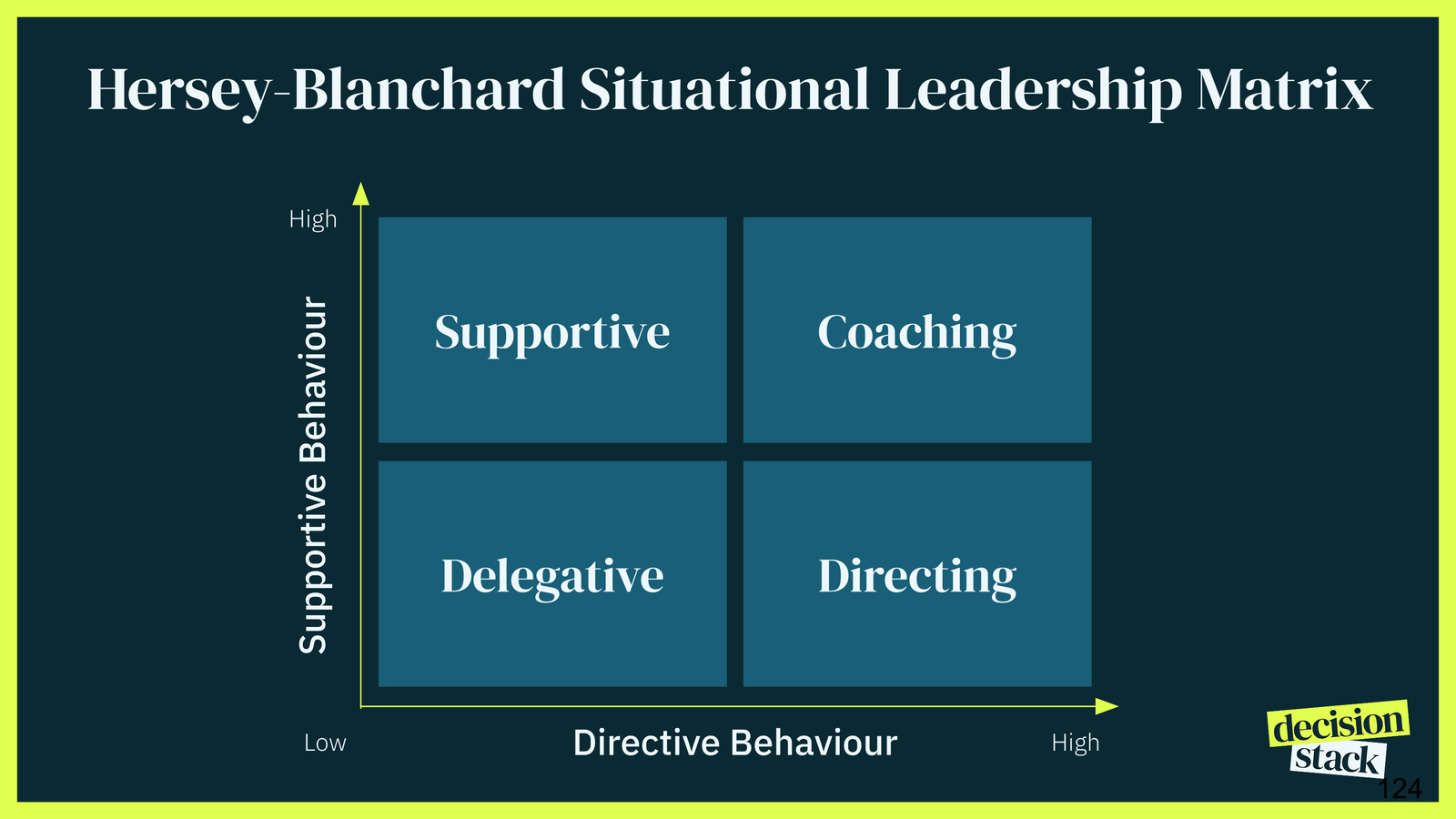
- Directing (High Directive, Low Supportive): You’re telling people what to do and how to do it
- Coaching (High Directive, High Supportive): You’re still involved in the how, but you’re explaining the why and soliciting input
- Supporting (Low Directive, High Supportive): The team decides the how, you’re there to support and enable
- Delegating (Low Directive, Low Supportive): The team owns it - you’re hands off
==You can’t move directly from Directing to Delegating==. You have to follow what Boris called the “Omega line” - moving through all four quadrants in a very deliberate order.
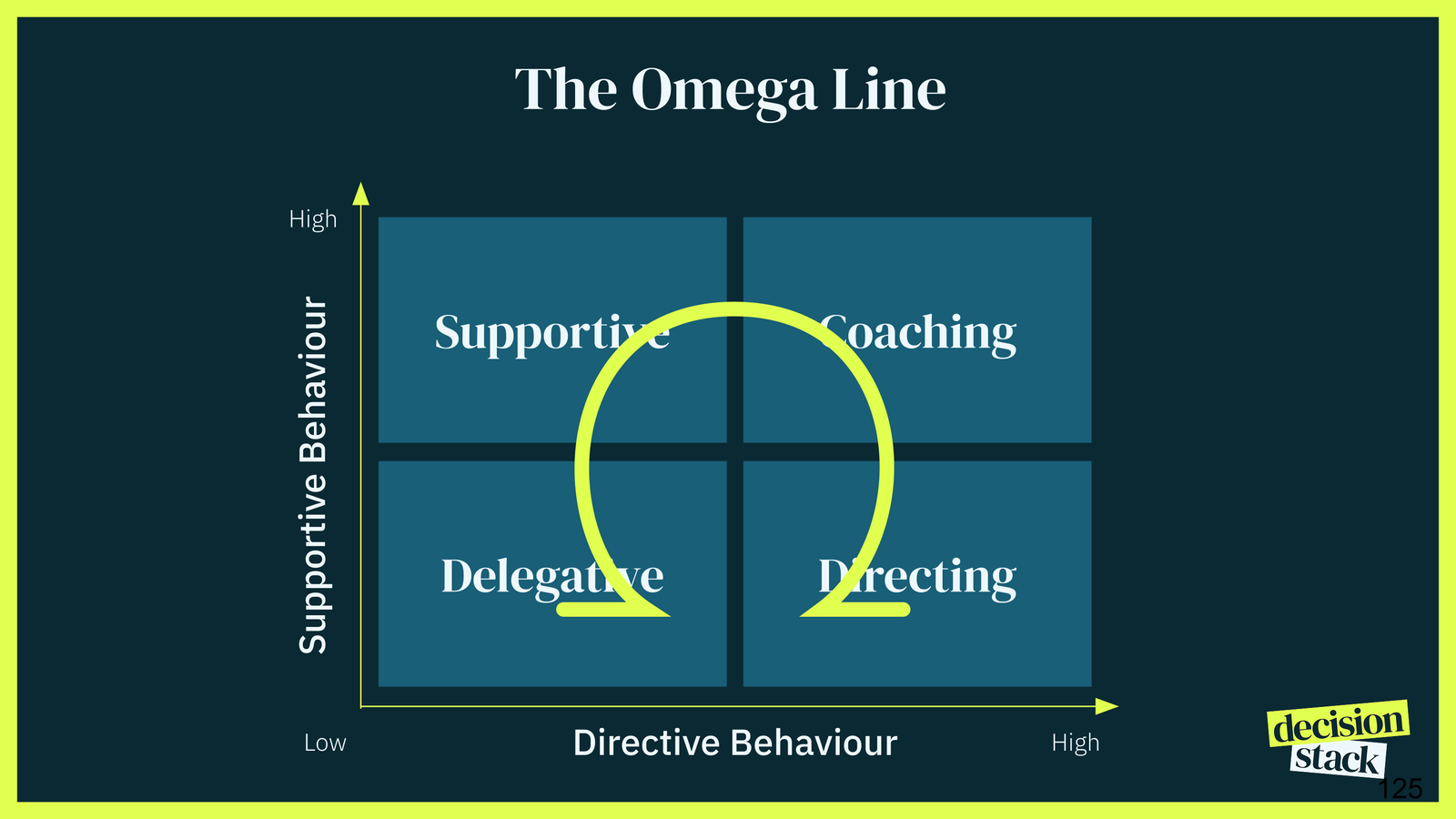
The Omega line works both ways. If you’ve been delegating to a team and something changes - new domain, new team members, new level of complexity - you can’t just jump back to Directing. You have to move back through the quadrants.
Directing → Coaching: We were always going to be highly directive on the early product decisions, but we should have been bringing the team along. Explaining why we were prioritising search over recommendations. Why the checkout flow needed to work a certain way. Asking for their input on implementation details and edge cases. Teaching them how to think about trade-offs between speed and quality, customer impact and technical debt, strategic alignment and tactical wins.
Coaching → Supporting: As the team built context, and the basic flows were in place, we should have gradually shifted more decisions to the team. They come to us with options, with their thinking laid out. We ask questions, challenge assumptions, but increasingly let them drive. “What do you think we should do about the trade-in flow?” “How would you approach personalisation?” We create the safety net that lets them build confidence, making progressively bigger calls.
Supporting → Delegating: Only after coaching them on how to think strategically, after supporting them as they made progressively bigger decisions, could we truly delegate. Hand them a customer problem - “retention is dropping, figure out why and fix it” - and trust them to own the solution. They’d have the context, the capability, and the confidence to own the outcomes.
Context is the Other Half of the Equation
Empowerment requires two things working in concert:
The “how” - following the Omega line: You can’t skip steps. You have to coach teams through the transition from directive to empowered, building their capability and confidence along the way.
The “why” - providing strategic context: Teams need to understand the Decision Stack - the vision, strategy, principles, and objectives that should inform their decisions. Without this context, autonomy is just teams thrashing around, making disconnected bets.
Most leaders focus on one or the other. They either provide great strategic context but remain directive in execution. Or they delegate decision-making but haven’t provided the context teams need to make good calls.