(The collapse of rational certainty)
The promise of rationalism was that everything can be known with certainty, and understood and controlled, by applying the eternally correct methods of reasoning. This was true enough to bring about the Scientific Revolution, the Industrial Revolution, reasonably well governed democracies, great advances in health, life expectancy, living standards, human rights, and saner public morality. There was every reason to suppose progress would continue and accelerate.
Unfortunately, in the early twentieth century, rationalism delved too deep, undermined its own foundations, and awakened eldritch horrors. By the middle of the century, the inescapable conclusion was that rationality, science, and mathematics cannot supply the ultimate justifications that seemed possible in the 1800s. It is not true that everything—or even anything—can be known with certainty; nor fully understood or controlled. There is no absolutely correct method of reasoning. The promises of rationalist eternalism, which underwrote the optimism of the systematic mode, cannot be fulfilled by any means.
==Institutional failures during the covid crisis, combined with popular pseudoscientific resistance to even sensible public health policies, may be a foretaste of greater catastrophes.==
A systematic culture answers “why” questions with “becauses”. The answers are reasonably consistent and coherent. A series of “why” questions eventually reaches an ultimate, eternal Truth. This Truth is the foundation of the system, which supposedly answers all questions for everyone, everywhere, eternally.
Religious systems, government systems, economic systems, aesthetic systems, philosophical systems, scientific systems, family systems: until a few decades ago, these provided iron frameworks for meaning. Meanings were held safely in place, certified by reliable structures. Human progress over the past few centuries can be attributed almost entirely to systems.
Human progress over the past few centuries can be attributed almost entirely to systems.
https://meaningness.com/collapse-of-rational-certainty
The end of rationalist certainty was not a single event. It came as a series of unexpected, unwanted discoveries, throughout the first half of the twentieth century.
“If you see anything at all that has measure, number, and order, do not hesitate to attribute it to God as craftsman. If you take away all measure, number, and order, there is absolutely nothing left”
“Nature and Nature’s laws lay hid in night: God said, Let Newton be! and all was light”
After two thousand years of all rational people knowing that mathematics must somehow explain everything, Isaac Newton finally proved that it did. Thank God!
Before the modern science powered by the rationalism, the elite’s power and willingness to exercise it depended on their unquestioning confidence in their religious justifications
The non-elite part of society believed that the elite were closer to god (because they were enlightened, chosen, destined and etc), so they should know what they were doing (right?)
Someday, with the rise of the scientific vision of the world, the religious perspective collapsed and science takes the responsibility of being the way to the truth.
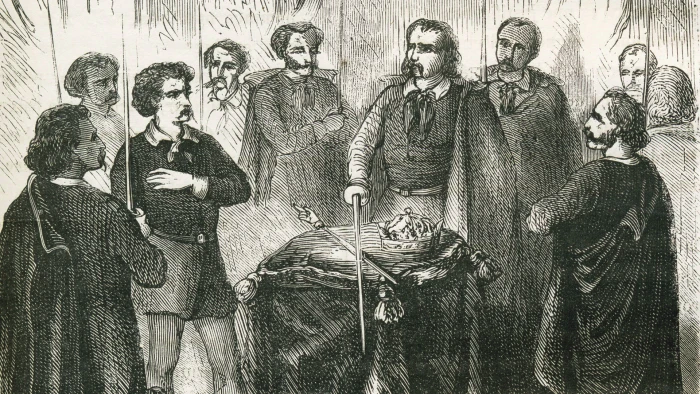
So we have a strictly relation of science with religion, where the science itself, will be worshiped like a god. And will offer some comfort, because even though we don’t blindly believe in a religious god, we still have the purpose of seeking the truths of the universe.
People didn’t stop believing in God, they stopped believing in religious explanations!
- There must be a god, we just need to understand his nature and explain his creation with scientific methods!
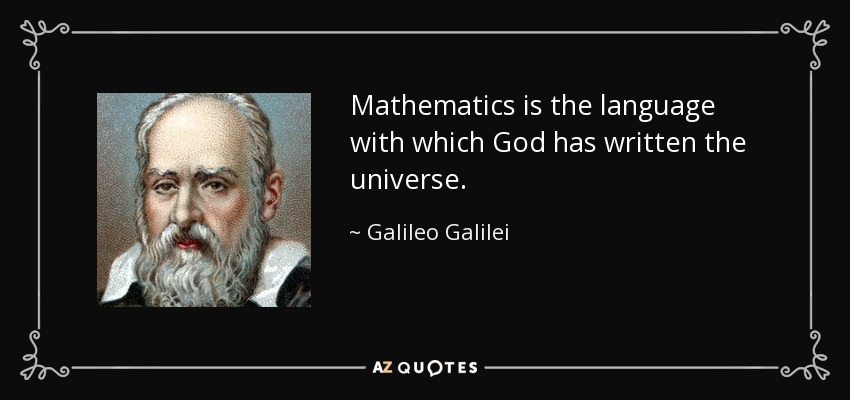
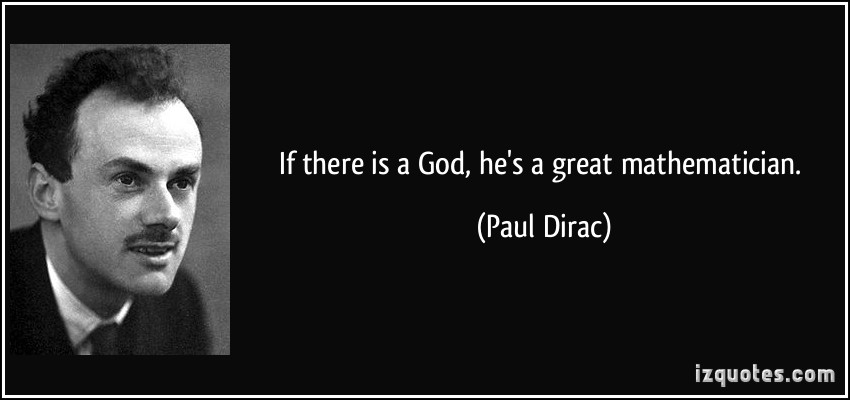
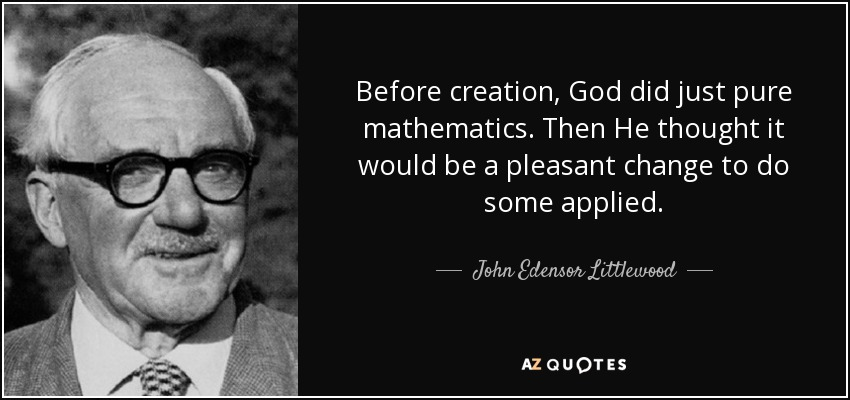
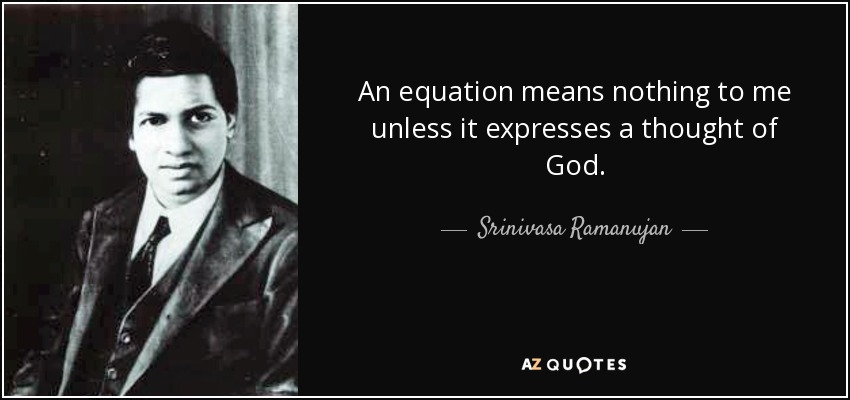
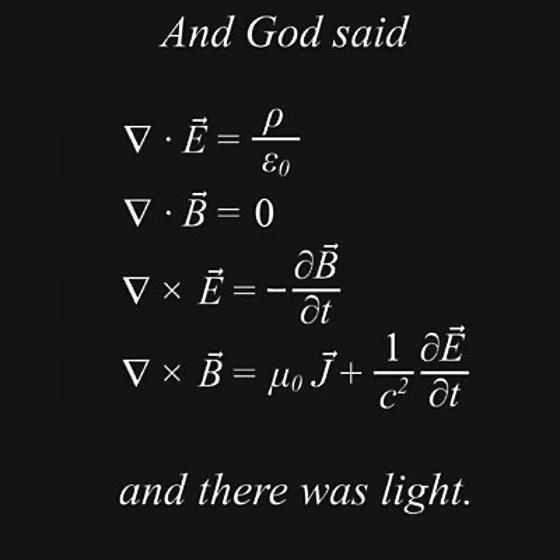
Mathematical physics gave, again, an unobstructed view of God: an understanding of His Will as manifest in His Creation. And, it seemed that it could explain everything.
The problem is that in some point, intellectual elite discover some flaws on math and physics models. This was absolutely terrifying, especially for those (elite) who uses science as some sort of power to control the others (non-elite), because it puts the credibility of the absolute truths delivered by science, into question.
Now we know that:
- Math is not COMPLETE
- Math is not CONSISTENT
- Math is not DECIDABLE
Wait, what??? The language that we believe that was God’s choice to describe the universe is not perfect? Does It even have flaws???
https://www.youtube.com/watch?v=HeQX2HjkcNo
https://www.youtube.com/watch?v=O4ndIDcDSGc
https://www.youtube.com/watch?v=macM_MtS_w4
==The main legacy of the foundational crises was loss of social confidence, rather than practical technical problems.==

The systematic mode was imposed by elites on a populace that never wanted it (although they massively benefited from it on average). The elites’ power and willingness to exercise it depended on their unquestioning confidence in their rational and religious justifications, and therefore in their own social, cultural, and moral authority.
When the countercultures challenged the elite establishment, it caved almost immediately. It was hollow, running only on momentum. The ruling class knew they had no justification for their authority apart from preexisting power, which (to their credit) they were unwilling to fully exercise. It’s not that they thought “Well, Gödel’s Incompleteness Theorem says I don’t really know anything, so probably the hippies and queers and addicts are right.” It’s that they weren’t taught that Euclid shows rationality provides certainty. For Victorian elites, it was inconceivable that sane people could contest the Law And Order agenda.
In 1970s America, everything could be doubted, at least in principle… so, however misguided, maybe the kids had a point about the war at least. Having lost their self-confidence, when anti-rationalist barbarians battered the gates, the establishment hemmed and hawed for a few years, and then just turned over the keys.